Responsible culture:
Our people
At SIG, we believe that lasting impact begins with our people.
A regenerative and just transition means creating safe, fair, and inclusive conditions for everyone – upholding human rights, fostering a respectful workplace, supporting health, safety, and wellbeing, developing and attracting talent, and ensuring strong governance and integrity in everything we do. These foundations are non-negotiable and guide how we operate across all regions and functions.
Our commitments
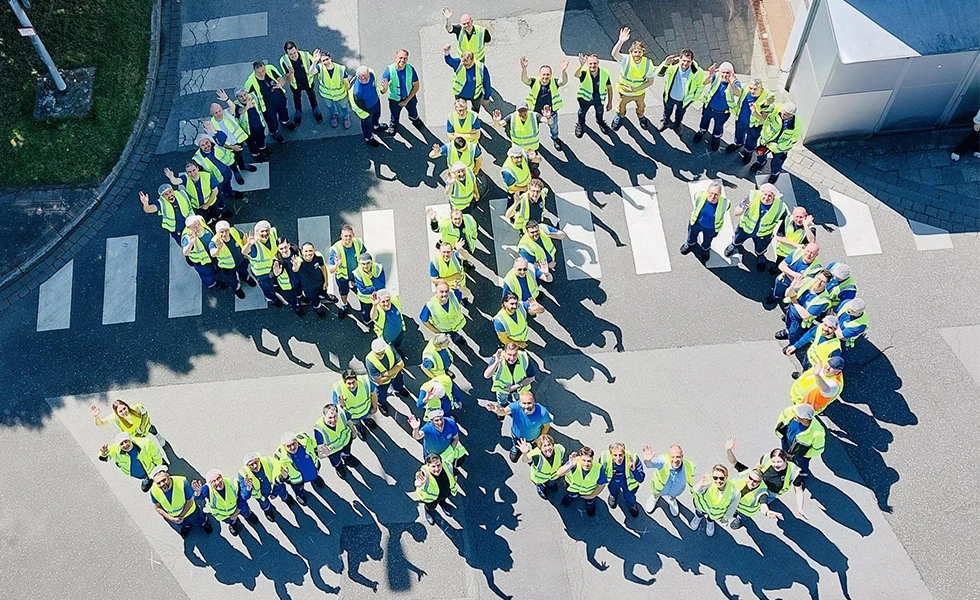
We are committed to fair working conditions and an inclusive, respectful environment where all our employees can thrive. This commitment is reflected in how we treat our employees, how we lead, and how we do business – every day, everywhere.
We protect human rights and fair working conditions, ensuring safe workplaces, fair pay, freedom of association, and zero tolerance for child labor, forced labor, or discrimination. Regular audits, risk assessments, and corrective actions help us uphold these standards across all our operations and suppliers.
Keeping people safe is non-negotiable. Through our “Take Care” safety culture, ISO 45001-certified systems and continuous training, we aim for zero harm. At the same time, we support physical, mental, social, and financial wellbeing – because health goes beyond safety.
We are building an inclusive and engaging culture where everyone belongs, can speak up, and is heard. We value varied perspectives and experiences, run employee groups, encourage open dialogue, and recognize contributions – because inclusion drives innovation, trust, and better decisions.
To secure our future, we focus on attracting and developing talent. That means fair hiring, transparent career paths, continuous learning, mentoring, leadership development, and strong internal mobility – so people don’t just work at SIG; they grow with SIG.
All of this is grounded in strong governance and ethics. Our Code of Conduct sets clear expectations, and our Integrity & Compliance Hotline allows employees and external partners to report concerns safely and anonymously. We act transparently, with zero tolerance for misconduct.
These commitments guide how we support our people, strengthen trust, and ensure that our business creates more value for society and the planet than it takes. They are embedded across our strategies, policies, and day-to-day actions.
Human rights
Our approach: measures taken and responsibilities
Chief People & Culture Officer and Director Corporate Responsibility
Our measures on human rights support a regenerative and just transition by ensuring safe, fair, and respectful working conditions across operations (and supply chains), with audits, risk assessments, and action plans driving accountability.
Conduct SEDEX Members Ethical Trade Audits (SMETA) at all our production sites every two years
We uphold the respect and protection of human rights in line with internationally recognized standards, the International Bill of Human Rights, the International Labour Organization (ILO) Core Labour Standards, the Ethical Trade Initiative Base Code, and the UN Global Compact.
SIG recognizes the right to freedom of association and collective bargaining and ensures working conditions and terms of employment for employees who are not covered by collective bargaining agreements are in line with our standards and local requirements.
We uphold human right consistently across all production sites, with strict standards reinforced through regular SEDEX SMETA audits (see Appendix: Certifications).
At our non-production sites, human rights risks are assessed through SEDEX Self-Assessment Questionnaires (SAQs) reviewed by internal experts, with corrective actions taken where needed (see Appendix: Certifications).
Through analyses and audits, such as SEDEX, we identified key areas and implemented targeted initiatives focusing on health, safety, wellbeing, and working hours within our operations.
We ensure safe and reliable access to water, sanitation, and hygiene (WASH) services for all employees by:
guaranteeing on-site availability of drinking water, sanitation, and hygiene facilities, monitored daily for functionality and cleanliness; and
maintaining compliance with national water quality standards and reinforcing safety through regular checks, anonymous feedback channels, and independent SMETA audits.
We provide a dedicated human rights knowledge base to build awareness of our commitments, our due diligence approach, and each employee’s role in upholding them.
Employees are trained on child and forced labor through the annual Code of Conduct program.
Our Integrity & Compliance Hotline enables anonymous reporting by stakeholders on potential human rights issues in our own or suppliers operations (see Governance and ethics).
Human rights are a core part of how we work with suppliers – see Responsible culture: Our suppliers for more details.
Excludes our production plant in Voronezh, Russia, due to limitations in respect of data access.
Upholding labor standards across our sites
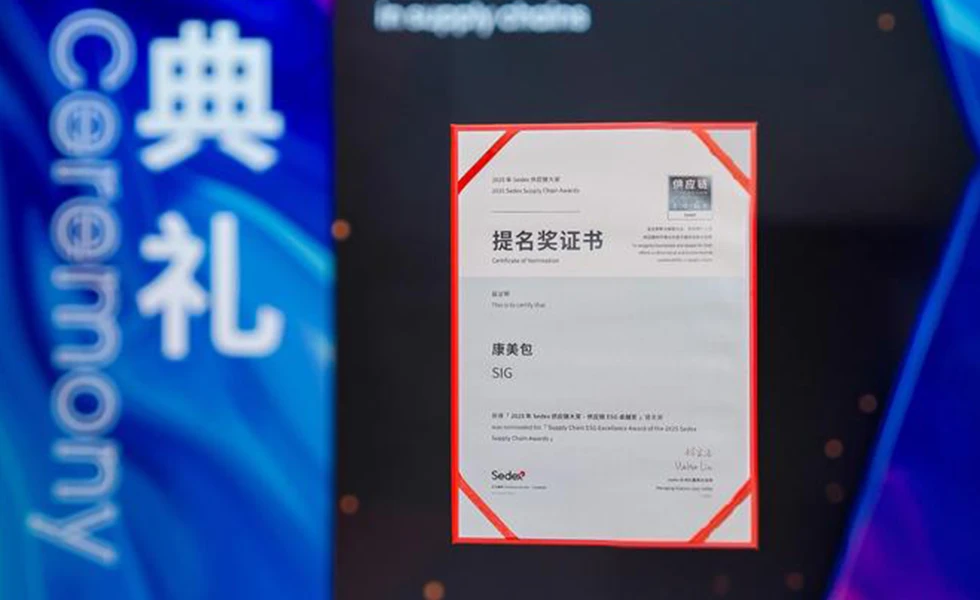
Most of our production sites (28 out of 301) have completed SEDEX SMETA audits.
We rolled out human rights risk assessments at our non-production sites using the SEDEX SAQ, with 36 of 40 sites completing the assessment.
We launched a dedicated human rights knowledge base and communications campaign to raise awareness of our commitments, due diligence approach, and each employee’s responsibility in upholding human rights.
1 Excludes our production plant in Voronezh, Russia, due to limitations in respect of data access.
Outlook
We will continue to strengthen our human rights agenda through regular risk analysis, SEDEX and EcoVadis assessments. Any gaps identified will be addressed with corrective actions, while supplier due diligence will be reinforced to raise standards across our value chain. Additionally, we plan to expand training programs to ensure employees and partners alike are well-equipped to uphold our commitments on human rights.
Health and safety
Our approach: measures taken and responsibilities
Chief Supply Chain Officer, implemented by EHS Lead
At the heart of everything we do is a simple truth: people matter. Keeping our employees safe and healthy is not just a requirement; it’s a reflection of who we are and what we stand for. When people feel protected, cared for, and empowered to make safe choices, they carry that mindset beyond the workplace – to their families, their communities, their everyday lives. That is why we believe in promoting a culture of safety and wellbeing that lasts 24 hours a day.
Achieve a 15% reduction in our Total Recordable Case Rate2 (per 200,000 hours worked), by 2030 (from 2026)
Risk management is legally required at all SIG production sites with each site completing Environmental, Health and Safety (EHS) compliance forms aligned with national laws, and undergoing SEDEX Members Ethical Trade Audits (SMETA) every two years (see Appendix: Certifications).
ISO 45001 certification for health and safety management is maintained at all operations, which includes Global Assembly, Global Research & Development, and Technical Service (see Appendix: Certifications), covering the largest of SIG risks and all employees and contractors at those sites.
All employees, contractors and visitors to any SIG site are required to adhere to policies and procedures set out by the management systems, and technical customer employees are instructed on the safe operation of our filling machines.
Annual risk assessments are conducted at each site, with root cause analysis of incidents and near misses driving local corrective actions.
EHS is a key pillar of the SIG Excellence System (SES)3 maturity assessment, performed annually, which improves safety processes through global best practice sharing and validates ISO certification and compliance requirements.
Workgroups are established to identify and implement technical protective measures on machinery, including folder sealers, extrusion lines, and finishing machines, enhancing operational safety.
Health and safety steering committees meet regularly and include plant management, EHS managers, People & Culture teams, works councils, and medical staff, ensuring broad engagement.
With active support from our team, plant and shift leaders to ensure local engagement, we address risks through our training and safety initiatives – covering our offices, remote work environments, and customer sites:
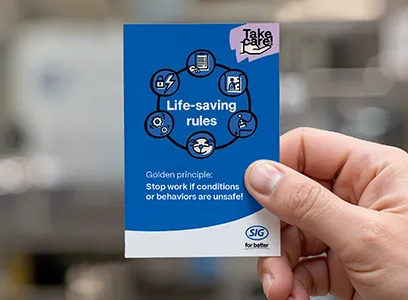
Comprehensive training for all employees on SIG’s Life Saving Rules and role-specific risk management and “The Golden Principle”: Stop work if conditions or behavior are unsafe.
“Keeping the conversation going on safety” to promote open dialogue and continuous awareness.
Safety observation programs at all plants, encouraging personal accountability and leadership by example.
Targeted education campaigns addressing specific safety concerns.
EHS Days to educate and share best practices on safety, health, and sustainability throughout SIG.
2 Total recordable cases include lost-time, medical treatment, and restricted work cases.
3 The SIG Excellence System (SES) is a company specific structure of foundations and pillars highlighting the interaction of specific tasks, which supports analysis and methodical improvement of our systems.

With over 9,700 employees across more than 100 countries, our responsibility is global – but deeply personal. A failure to ensure safety and health can have devastating consequences: injuries that change lives, or illnesses that silently take hold over time. That’s why our commitment is unwavering. By focusing on prevention, care, and wellbeing, we not only protect the rights and dignity of every person in our organization – we also strengthen our shared future.
Because when people thrive, so does our company. Fewer accidents. Healthier teams. Stronger engagement. It’s all connected. And it all starts with putting people first.
Fabio Grazioli
Chief Supply Chain Officer
Life-Saving Rules review
In 2025, we took a fresh look at our Life-Saving Rules to ensure they continue to protect our people in the most effective way possible. As part of this important update, we carefully reviewed the content of our former five Standard Operating Procedures (SOPs), refining what works and enhancing elsewhere where needed.
A key addition this year was to include new rules, supported by a focused education campaign, addressing “Moving and Rotating Objects” (MORO) – a critical risk area that deserves focused attention. Work on machinery is permitted only when it is safely shut down, with guards in place, personal safety measures observed and performed by trained personnel; any irregularities must be reported immediately.
Alongside the content update, we also introduced a refreshed visual design aligned with our new corporate branding – helping to increase visibility, clarity, and impact. Because safety isn’t just about rules; it’s about making sure they’re understood, remembered, and lived every day.
Mobile and Rotating Objects (MORO) campaign
Following a concerning rise in incidents involving moving and rotating machinery parts across several plants in 2024, we were reminded that even the smallest oversight can have serious consequences. To address this, we launched the MORO campaign, aimed at strengthening awareness and reinforcing safe practices around our machines.
The campaign highlighted the critical risks linked to moving equipment – such as entrapment, cuts, impacts, and burns from friction or overheated parts – and that protecting our hands and preventing injuries is not only a priority but also a daily responsibility. Plant managers were actively engaged to lead these discussions within their sites, using the campaign as an opportunity to engage teams, raise awareness, and emphasize the importance of safe behavior when working with MORO risks.
By remaining vigilant, following established procedures, and supporting one another, we can continue to reduce risks and build a safer workplace for everyone.
Outlook
In 2025, we will continue to strengthen our global safety culture and drive operational excellence by building on key initiatives across all regions and functions.
A central focus will be the rollout of a standardized observation and feedback program across all sites, designed to promote proactive safety behavior, increase awareness, and foster continuous learning through consistent engagement.
To standardize our safety management systems, we will implement unified methodologies, including a global Occupational Health and Safety (OHS) risk assessment framework and an enhanced incident and near-miss reporting system. These tools will improve transparency, data quality, and risk mitigation.
Digitalization will continue to be a key enabler, helping streamline administrative processes through smart digital tools that allow teams to focus more on prevention, analysis, and continuous improvement.
We will deepen the integration of Field Service Engineers into our global safety framework, recognizing their critical role in driving safety performance in the field. A strong example of this was in America North, where collaboration with customers led to enhanced safety training, the introduction of shared tools such as the Lockout–Tagout–Testout (LOTOTO) kit for energy isolation and built of a culture of joint responsibility.
Together, these initiatives will move us closer to our vision of a strong and proactive safety culture – one that protects our people and enables sustainable operational excellence.
Employee wellbeing
Our approach: measures taken and responsibilities
Chief People & Culture Officer
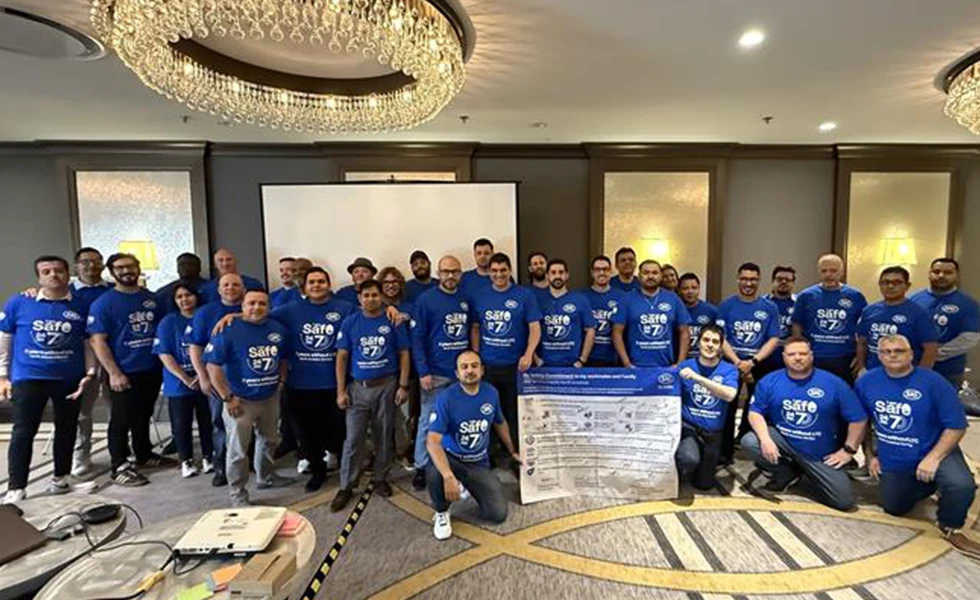
Our wellbeing programs reinforce a just transition by addressing the whole person: physical, mental, social and financial.
Improve employee wellbeing by reaching an average score across wellbeing indicators that exceeds the industry benchmark4
Achieve and maintain a health rate of greater than 97% annually across the organization (from 2026)
We ensure colleagues at larger sites can benefit directly from on-site care, providing access to medical professionals, health checks, and fitness programs, with information on offers and opening times via the SIGer app and other on-site communications.
Our global ergonomics training and adapted workstations improve working conditions and help to mitigate musculoskeletal and other health risks.
Clear guidelines have been implemented to support work-life balance for both production and office employees, while managers receive training to recognize and support colleagues facing mental health challenges.
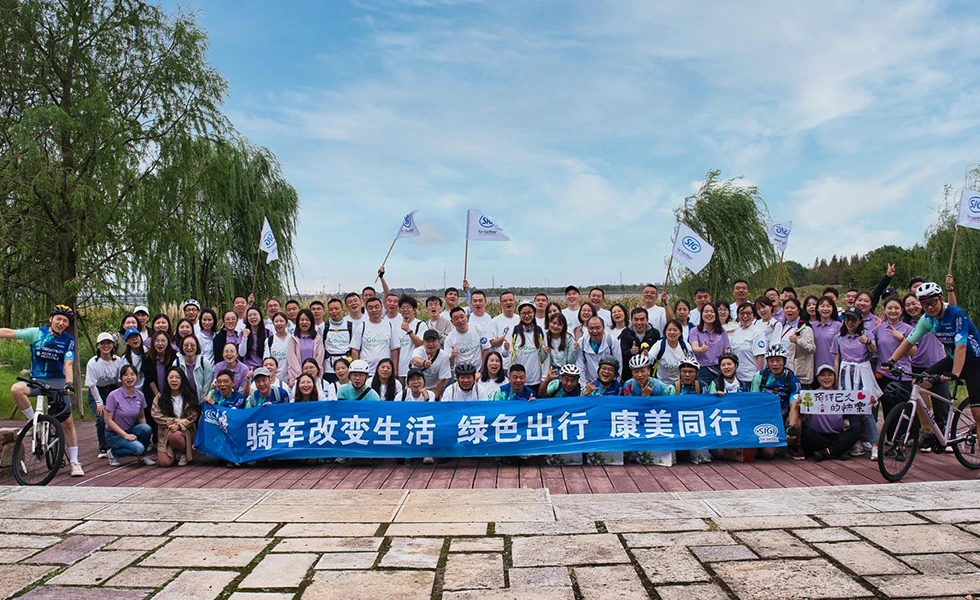
BeWell is an established SIG year-round program, embedding physical, mental, social, and financial wellbeing into daily life.
We continuously create spaces for open dialogue through psychological safety training, coffee roulette, and assistance programs.
Psychological Safety
In 2025, SIG strengthened its focus on psychological safety as a foundation for trust, collaboration, and wellbeing. Through leadership learning, employee engagement, and wellbeing initiatives, the company helped teams create environments where people feel safe to share ideas, take risks, and learn from mistakes.
A new Psychological Safety learning series – including an e-learning module, workshops, and a month of upskill sessions – equipped leaders with practical tools to foster open, high-performing teams. At the same time, the BeWell program continued to translate wellbeing into action through stress, sleep, and nutrition workshops, mindfulness challenges, and employee-led activities.
This adds to our already high engagement, with scores above the industry norm4, and highlights the continued actions taken toward building a culture of openness, respect, and shared growth across SIG.
4 The Industry benchmark defined as norms for manufacturing companies participating in the Willis Towers Watson employee engagement survey.
Outlook
Wellbeing at SIG will increasingly focus on resilience and mental health. We will deepen awareness through campaigns, peer support networks, and access to assistance programs. Wellbeing will also be embedded more closely into everyday ways of working, linking flexibility and balance directly to sustainable performance. To ensure progress, we will strengthen measurement by tracking not only participation levels but also the impact of wellbeing activities on employee outcomes.
Shaping an inclusive and engaging culture
Our approach: measures taken and responsibilities
Chief People & Culture Officer
Our engagement and workplace culture measures advance a just transition by building a supportive workplace where all voices are represented, employees can speak up safely, and recognition practices ensure fairness and belonging.
Achieve engagement score above industry benchmark4
Our engagement survey provides colleagues with a structured way to voice feedback and influence decisions.
We run recognition and fair pay programs including the Shine Awards, and development of a five-year roadmap toward fair pay.
The monthly SipConnect initiative fosters inclusivity through a global pairing of colleagues for online coffee breaks.
Through our storytelling platforms like SIGers on the Move, we highlight mobility, share experiences and personal growth.
Our global reverse mentoring initiatives complement our global mentoring program, giving senior leaders fresh perspectives while helping colleagues build leadership skills and networks.
Our recruitment practices utilize standardized interview questions and diverse interview panels where possible.
We train recruiters and hiring managers on unconscious bias and cultural awareness.
Campaigns ensure visibility and celebration of diverse communities throughout the year.
Together we celebrate and raise awareness at a global and local level on international celebration days.
4 The Industry benchmark defined as norms for manufacturing companies participating in the Willis Towers Watson employee engagement survey.
Employee Engagement and Recognition
In 2025, we strengthened recognition and fostered a sense of belonging across our global workforce. This progress is reflected in our strong employee survey participation rate of 84% and an engagement score of 86% favorable responses, with DEI, retention, and learning highlighted as top strengths.
We also advanced our pay and living wage analysis to cover 46% of our workforce, a significant increase from 28% in 2024.
Outlook
Looking ahead, we remain committed to building a culture where people feel valued, supported, and heard. In 2026, we will run our next global survey and strengthen transparency around action planning. We will also launch a global recognition program and expand fair-pay coverage, while embedding psychological safety into leadership routines and maintaining an inclusive calendar. Together, these actions will ensure colleagues continue to see SIG as an inclusive and engaging workplace during times of change.
Attracting and developing talent
Our approach: measures taken and responsibilities
Chief People & Culture Officer
We are committed to fostering a workplace where people thrive and contribute meaningfully to a regenerative and just transition. Through merit-based recruitment and forward-looking talent development, we ensure fair access to opportunities, cultivate diverse perspectives, and equip our employees with future-fit skills and transparent career paths.
Achieve and maintain an average of at least 30 training hours per employee per year (from 2026)
Increase internal hire rate to 50%, by 2030 (from 2026)
Our globally standardized recruitment process ensures that both internal and external candidates experience a consistent hiring journey, regardless of region or country.
We have enhanced the capabilities of our recruitment system by introducing new features for employee referrals, interview scheduling, candidate application, and candidate review.
The Talent Acquisition teams receive upskilling sessions to help focus on identifying the most effective talent channels, refining sourcing strategies, reaching qualified candidates, and mitigating bias in recruitment.
By providing diverse training and learning options to all employees, we support continuous development:
Practical upskilling sessions aligned with our competency framework, such as communication and storytelling skills focused on presentation and narrative-building.
On-demand learning through platforms Bookboon and Speexx.
Global sales training sessions to strengthen commercial capabilities across markets.
Over 50 e-learning modules on the SIG Academy, covering key business pillars.
We foster professional growth through coaching and mentoring opportunities for all employees:
Regular performance and career development reviews delivered.
Talent coffee breaks with the Group Executive Board and mentoring with senior leadership.
The Global Mentoring Program, which pairs cross functional professionals and includes reverse mentoring.
Coaching opportunities delivered via Bettercoach and independent providers.
Our targeted leadership development programs help build strategic and change leadership capabilities:
New Leaders Program combining emerging leader coaching and real-world challenges.
Leadership Accelerator helping middle managers with strategy execution and fostering high-performing teams.
Transformational Leadership Program building capacity to lead change and drive growth.
We enable internal communication and knowledge sharing through monthly Leadership & Wellbeing podcasts, featuring leader insights, and the learning and development news channel, sharing curated learning opportunities.
Investing in people
Some of the key highlights in 2025 reflect SIG’s continued investment in structured career development, leadership engagement and development, and employee upskilling:
We completed the company-wide rollout of our Career Path Framework, mapping 100% of senior roles.
The launch of our new mentoring program began with the pairing of Group Executive Board members with high-potential talents.
Upskill sessions became one of SIG’s most recognized initiatives, engaging over 3,300 participants across 49 sessions.
We ran a pilot of our Leadership Accelerator with 14 participants to bridge strategy and execution.
Outlook
We will continue to evolve our approach to attracting talent by automating recruitment processes to improve speed and candidate experience, while refining sourcing strategies to reach more diverse talent pools and enhance internal mobility. At the same time, we will strengthen our employer branding by showcasing life at SIG and the opportunities for career growth available to colleagues across the organization.
In 2026, we will roll out the Career Path Framework to all generic roles, ensuring clarity and consistency in career development across SIG. Building on this, we will implement a new Talent Strategy with the goal of tripling the leadership pipeline strength by 2028. AI-enabled tools will play a central role in succession planning and career mobility, while continued investment in leadership programs, coaching, and experiential learning will ensure our people have the skills to thrive in a changing business environment.
Governance and ethics
Our approach: measures taken and responsibilities
Senior Vice President Legal & Compliance
We act with professionalism and integrity in all our business dealings, guided by the ethical principles set out in the SIG Code of Conduct. These principles include ethical and compliant behavior including promoting fair and respectful treatment and ensuring responsible, transparent engagement with all stakeholders.
Maintain mandatory annual Code of Conduct training for all employees
-
The SIG Code of Conduct, approved by our Board of Directors, complemented by policies and guidelines on specific topics and available in 19 languages, sets out our ethical principles in regard to:
-
ethical and compliant behavior, including anti-bribery and anti-corruption;
-
fair, respectful, and courteous treatment of fellow employees and others with whom we interact, including equal employment opportunity, anti-harassment and anti-discrimination;
-
fair and appropriate consideration of the interests of all stakeholders as well as of the environment, including avoidance of conflicts of interest and human rights compliance; and
-
professionalism and good business practice, including anti-trust compliance and privacy and data protection.
-
-
Our zero-tolerance approach to bribery and corruption in any form is stipulated in the SIG Code of Conduct, detailed in our Anti-bribery and Anti-corruption Policy, and reinforced through training.
-
We maintain an Integrity and Compliance Hotline whereby;
-
employees and all external stakeholders can report anonymously (where permitted by local legislations) any concerns related to bribery, corruption, unethical conduct, human rights violations or the environment in our own operations or our business partners’ activities;
-
all reports are investigated and appropriate action taken, including, but not limited to, disciplinary measures;
-
the effectiveness of the grievance mechanism is regularly assessed, including by statistical analysis of the reports and other controls; and
-
reports containing critical concerns are communicated to the Board of Directors, at its quarterly meetings or on an ad-hoc basis, if required.
-
-
All our production plans undergo a SEDEX SMETA audit every two years which includes business ethics (see Appendix: Certifications).
-
We safeguard personal data and educate our employees on IT security to combat the increasing threat of global cyberattacks;
-
The international ISO 27001 standard on information security management is maintained in China, Germany and Romania covering the provision of Information Communication Technology Infrastructure, related applications, data centers and production operations.
-
To improve our security awareness culture, we require all employees to participate in data protection and cybersecurity training, and provide continuous education through a survey, case examples, personal tips, sharing experiences, “dos and don’ts” and phishing simulations.
-
-
We train our people and raise awareness on governance topics:
-
We require all employees to complete mandatory training on the SIG Code of Conduct every year.
-
We provide additional in-depth training, including on anti-bribery, anti-corruption, anti-trust and data privacy, for employees in high-risk roles such as Sales, Procurement, Finance and People & Culture.
-
-
We encourage people to speak up without fear of retaliation if they have any questions or concerns, including those related to bribery and corruption, via their line managers, our People & Culture teams, global and regional Legal & Compliance Officers or via our Integrity and Compliance Hotline.
-
We engage responsibly and transparently with all relevant and affected stakeholders in developing, managing and communicating governance topics and activities, including by developing channels (such as our Integrity and Compliance Hotline) to enable them to voice their complaints and grievances.
-
We engage with a wide range of stakeholders, which includes discussions on our approach to governance (see Introduction: Stakeholder engagement).
Investigating and acting on reports received
Reports received via our Integrity and Compliance Hotline and other channels in 2025 mainly related to workplace and employee matters, of which none were considered critical. We investigated all reports received and took disciplinary action, including reprimands and dismissals, where appropriate.
We have not identified cases of significant non-compliance with applicable laws and regulations during the reporting period and there were no cases in which monetary fines were incurred5. During the reporting period there were no confirmed incidents where contracts with business partners were terminated or not renewed due to violations related to corruption, nor were there any confirmed public legal cases regarding corruption brought against the organization or our employees.
If reports containing critical concerns are received, they are communicated to the Board of Directors, the Group’s highest governance body, at its quarterly meetings or on an ad-hoc basis, if required. During the reporting period there were no concerns considered critical.
5 We define significant instances by reference to a value exceeding €30 million, in line with the materiality threshold applied in connection with our consolidated financial statements 2025.
Outlook
Governance and ethics remain the foundation of how we operate. We will continue to strengthen compliance monitoring globally and enhance transparency through regular reporting to the Board of Directors. By embedding compliant and ethical behavior into every level of our organization, we protect trust with our employees, customers and partners alike.
Our approach: assessing effectiveness
In addition to the performance assessment of Our people targets and Key performance indicators, we assess the effectiveness of our policies and actions through the below reporting and monitoring by responsible parties, as well as SEDEX SMETA audits detailed in the Appendix: Certifications:
Reporting |
|
Department |
|
Responsible |
|
Regularity |
|---|---|---|---|---|---|---|
Human rights |
||||||
Human Rights Risk Assessments |
|
Global Environment, Health & Safety |
|
Chief People & Culture Officer |
|
Annually |
Health and safety |
||||||
Health and Safety KPIs |
|
Global Supply Chain |
|
Global Executive Board |
|
Monthly |
Incident Reports |
|
Manufacturing plants |
|
Global Environment, Health & Safety Lead |
|
As occurring |
Risk Assessments |
|
|
|
Annual |
||
Shaping an inclusive and engaging culture |
||||||
Engagement and Diversity Data |
|
Group Culture & Engagement |
|
Global Executive Board, |
|
Quarterly |
Attracting and developing talent |
||||||
Succession Health KPI |
|
Global Talent Development |
|
Chief People & Culture Officer |
|
Quarterly |
Internal Fill Rate for CKPs |
|
|
|
|||
Individual Development Plans (IDPs) |
|
|
|
|||
Other Talent KPIs |
|
|
|
|||
Governance and ethics |
||||||
Compliance Matter Updates and Statistics |
|
Group Legal & Compliance |
|
Audit and Risk Committee (a committee of the Board of Directors) |
|
Quarterly or ad hoc (as appropriate) |
Internal Audit Report |
|
Internal Audit |
|
|
Five times annually |
|
Internal Audits |
|
All sites |
|
Internal Audit |
|
Regular schedule |
Our targets and performance
2020 to 2025 targets and performance
Target |
|
Material topics |
|
Progress tracker |
|
2025 performance |
|
Next steps |
||||||||||
|---|---|---|---|---|---|---|---|---|---|---|---|---|---|---|---|---|---|---|
Human rights |
||||||||||||||||||
Maintain SEDEX Members Ethical Trade Audit (SMETA) at all production sites |
|
|
|
|
|
We conducted an assessment of potential human rights risks and impacts through SEDEX SMETA audits at 28 out of 301 of our production sites. Our new production site in Ahmedabad, India, commenced operations in 2025, and its audit was conducted in January 2026. |
|
Retained in our Human rights commitment. |
||||||||||
Conduct assessments of potential human rights risks and impacts in 50% of our own plants every two years |
|
|
|
|
|
|
Retained as part of our Human rights commitment to conduct SEDEX SMETA audits at all production entities every two years. We additionally complete SEDEX Self-Assessment Questionnaires at non-production sites. |
|||||||||||
Advance our human rights risk identification and assessment processes in our own operations and supply chain to define salient human rights issues |
|
|
|
|
|
We completed two-yearly SEDEX SMETA audits of our production plants and have conducted further human rights risk assessments using SEDEX. In our supply chain, we updated our assessment methodology using EcoVadis. |
|
Our human rights risk assessment process is embedded within our Human Rights, Labour and Community Engagement Policy as well as in our Responsible Sourcing Policy and is assessed through SEDEX SMETA audits, EcoVadis methodology and self-assessment questionnaires. |
||||||||||
Health and safety |
||||||||||||||||||
Zero recordable cases2 |
|
|
|
|
|
While we have made progress in recent years – improving the overall recordable case rate to 0.63 in 2024 – our 2025 performance of 79 total recordable cases and overall recordable case rate of 0.89 reflects the ongoing challenge of a significantly expanded global footprint and multiple production technologies, following the integration of our bag-in-box, spouted pouch and chilled carton packaging businesses. |
|
Our ambition to prevent all health and safety incidents and work-related illnesses is retained in our Environment, Health and Safety (EHS) Policy while our ongoing commitment to health and safety is operationally focused (see Health and safety). |
||||||||||
Employee wellbeing |
||||||||||||||||||
Define a holistic strategy and roadmap to foster wellbeing at SIG |
|
|
|
|
|
We completed the rollout of a holistic wellbeing program, delivering global awareness activities, guides, training (e.g., psychological safety), and a podcast to strengthen leadership and wellbeing while equipping employees and managers with practical support skills. |
|
Following our roadmap definition, we are now benchmarking our wellbeing to track our performance in a more quantifiable manner (see Employee wellbeing). |
||||||||||
Shaping an inclusive and engaging culture |
||||||||||||||||||
Increase percentage of women in leadership positions to 30% |
|
|
|
|
|
After a strong upward trend from 17% to 25% women in leadership since the baseline year, the share remained stable in 2024 and 2025. This plateau reflects the impact of structural changes within the leadership group and the gender mix of hires and exits. |
|
We remain committed to advancing initiatives that support all employees, and we will continue to track and transparently report on the representation of women in management roles. |
||||||||||
Maintain survey score linked to inclusive environment above industry benchmark3 |
|
|
|
|
|
Our inclusivity scored 86%, up one point from 2023 and nine points above the industry benchmark, reflecting strong results in dignity and respect, a harassment-free workplace, and equal opportunities. |
|
Our Code of Conduct commitment reinforces our inclusive environment annually (see Shaping an inclusive and engaging culture). |
||||||||||
Achieve engagement level above industry benchmark3 |
|
|
|
|
|
We continued to improve our engagement level by achieving a score of 86%, one point above our 2023 result and two points above the industry benchmark. |
|
Retained in our Shaping an inclusive and engaging culture commitment. |
||||||||||
Increase percentage of employees who feel SIG has responded to their feedback based on the last survey |
|
|
|
|
|
64% of employees feel that we responded to their feedback, an increase of 2 points compared to 2023. |
|
We continue to listen to our people and respond to their concerns, and consider this an important aspect in our continued commitment to improve employee wellbeing (see Employee wellbeing). |
||||||||||
Increase percentage of employees who feel SIG makes adequate use of recognition and reward other than money |
|
|
|
|
|
With a score of 65%, and an increase by 2 points on 2023, employees continue to see an improvement in our non-monetary recognition programs. |
|
We continue to recognize our employee achievements, and consider this an important aspect in our continued commitment to improve employee wellbeing (see Employee wellbeing). |
||||||||||
Attracting and developing talent |
||||||||||||||||||
Sustain our training and development investment above industry benchmark |
|
|
|
|
|
We continued to invest in training and development, achieving an average of 25.7 hours of training per employee, 1.7 hours above the industry benchmark. |
|
Updated in Employee wellbeing with a more quantitative commitment. |
||||||||||
Governance and ethics |
||||||||||||||||||
Mandatory annual Code of Conduct4 training for all employees |
|
|
|
|
|
Approximately 99% of our employees completed an annual certification on the SIG Code of Conduct and approximately 99% completed additional in-person or virtual training on the SIG Code of Conduct. |
|
Retained in our Governance and ethics commitment. |
||||||||||
|
||||||||||||||||||


See Appendix: Key performance indicators for related key performance indicators.
2026 to 2030 targets
Target |
|
Material topics |
|
2025 performance |
||||||||||
|---|---|---|---|---|---|---|---|---|---|---|---|---|---|---|
Human rights |
||||||||||||||
Conduct SEDEX Members Ethical Trade Audits (SMETA) at all our production sites every two years |
|
|
|
We conducted an assessment of potential human rights risks and impacts through SEDEX SMETA audits at 28 out of 301 of our production sites. Our new production site in Ahmedabad, India, commenced operations in 2025, and its audit was conducted in January 2026. |
||||||||||
Health and safety |
||||||||||||||
Achieve a 15% reduction in our Total Recordable Case2 Rate (per 200,000 hours worked), by 2030 |
|
|
|
Reporting from 2026 |
||||||||||
Achieve and maintain a health rate of greater than 97% annually across the organization |
|
|
Reporting from 2026 |
|||||||||||
Employee wellbeing |
||||||||||||||
Improve employee wellbeing by reaching an average score across wellbeing indicators that exceeds the industry benchmark3 |
|
|
|
Employee wellbeing was measured through the employee survey recording a score of 82%, four points above the industry benchmark, providing clear visibility of progress toward a sustainable and healthy work environment across the organization. |
||||||||||
Shaping an inclusive and engaging culture |
||||||||||||||
Achieve engagement score above industry benchmark3 |
|
|
|
We continued to improve our engagement level by achieving a score of 86%, one point above our 2023 result and two points above the industry benchmark. |
||||||||||
Attracting and developing talent |
||||||||||||||
Achieve and maintain an average of at least 30 training hours per employee per year |
|
|
|
Our achievment of an average of 25.7 hours of training per employee in 2025 reflects a 5-hour increase per employee compared to 2024, already indicating strong progress toward our target of 30 hours of training per employee. |
||||||||||
Increase internal hire rate to 50%, by 2030 |
|
|
|
Reporting from 2026 |
||||||||||
Governance and ethics |
||||||||||||||
Maintain mandatory annual Code of Conduct4 training for all employees |
|
|
|
Approximately 99% of our employees completed an annual certification on the SIG Code of Conduct and approximately 99% completed additional in-person or virtual training on the SIG Code of Conduct. |
||||||||||
|
||||||||||||||
See Appendix: Key performance indicators for related key performance indicators.