Food+
Access to affordable, safe, and nutritious food and beverages is a fundamental human right. A regenerative packaging solution can sustainably serve this fundamental right by transforming the food system to:
- Support a decrease in food loss and waste.
- Ensure access to safe, affordable nutrition, contributing to better health for a growing population.
- Minimize the food supply system’s impact on climate and nature and help to restore natural resources.
Our regenerative packaging solution contributes significantly to this transformation.
We are providing an aseptic food packaging system that enables delivery of affordable and safe nutrition and relies on renewable or recycled materials that replenish ecosystems and natural resources1.
Our packaging solutions enable a resilient, shelf-stable, secure food supply with a positive impact on nutrition and health.
We are providing tailored packaging for different needs and distribution conditions. This enables our customers to extend the reach of nutritious products to areas with limited infrastructure.
We are supporting our customers with lightweight packaging systems that require low logistics efforts and offer a long shelf life, thereby resulting in less food waste.
1 Aseptic packaging extends shelf life without refrigeration and preserves product quality and nutrients. It reduces energy consumption during processing and transport, causing less food waste, and uses lighter, more efficient packaging materials, thereby reducing costs.

Our commitments
We commit to providing access to affordable, safe and nutritious food and beverages:
Deliver nutritious food through increasing access to safe, affordable nutritious food without preservatives and contributing to better health;
Help transform the food system via a regenerative packaging solution where innovation minimizes food loss/waste and increases the nutritional value of food and beverages; and
Ensure product and food safety and maintain the nutritious quality of packed products.
Our approach
Measures taken and responsibilities
Deliver nutritious food
Chief Markets Officer
Access to safe and nutritious food is a growing global challenge, intensified by climate change, food waste, and unequal distribution.
We recognize the vital role packaging plays in enabling food security, reducing waste, and extending shelf life, especially in regions where infrastructure is limited. Through our technologies, partnerships, and global reach, we are uniquely positioned to support both people and planet through our commitment to delivering nutritious food.
To measure and advance this impact, SIG follows independent Health Star Rating (HSR) guidelines to identify nutritious food and beverages packed in SIG packaging. The HSR system evaluates products based on both risks, such as sugar and saturated fat, and beneficial nutrients, including protein or fiber content. This allows us to track and increase the proportion of nutritious products we help bring to market.
In addition, we place a special focus on protein sources, essential for a healthy and balanced diet. By aligning with the HSR framework and guidelines on foods containing protein, we aim to ensure our packaging contributes not only to healthier choices but also to improved access to essential nutrients.
Increase the yearly volume of nutritious2 food and beverage products brought to consumers in all SIG packs by greater than 50%, by 2030 (from 2020)
Deliver 14 billion liters per year of nutritious2 protein sources, by 2030
-
Our newly defined product innovation strategy, used in customer collaborations, is a framework for our future category innovations and centers on four key areas: protein enrichment, gut health, sugar reduction, and efficient hydration.
-
SIG partners in the SenSpores project, led by Hochschule Niederrhein and funded by the EU, to advance rapid, on-site detection of microbial spores in liquid foods and reduce spoilage-related waste.
-
We are continuing to run the SIG Incubator program which supports food-tech and food and beverage start-ups by providing access to advice, expertise and consumer-focused insights – as well as by enabling them to use our filling machines, either at our own SIG Test-filling Centers or at existing SIG customers’ plants to create and launch next-gen product solutions faster on the market.
-
SIG is a Diamond Partner of MassChallenge Switzerland, supporting its Sustainable Food Systems Program to accelerate start-ups driving innovation in renewable packaging and sustainable food solutions. Celebrating 10 years of impact in 2025, MassChallenge Switzerland has helped 1,175 start-ups raise CHF 2.9 billion and create over 86,000 jobs, with SIG contributing expertise and resources to foster a global ecosystem of climate-resilient and resource-efficient innovations that help to transform the food system.
-
SIG is a member of U.S.-based food innovation platform MISTA, which brings together leaders from the global food and beverage industry to explore collaborative ways to accelerate the transformation of the global food system into a more regenerative one.
-
We are scaling up the SIG Foundation’s “Cartons for Good” initiative. Further details can be found in Responsible culture: Communities.
2 Different types of products are categorized according to their nutritional profile based on the independent Health Star Rating System.
Bringing more nutritious food to people everywhere
From superfood acai bowls to plant-based milks and protein-packed yogurts, SIG packaging is helping brands bring more nutritious choices to consumers worldwide.
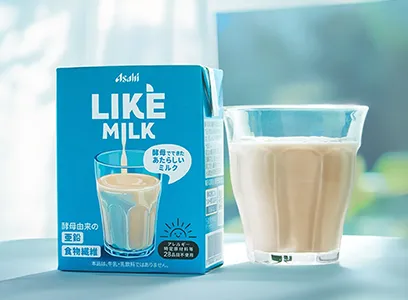
In Japan, Asahi is using its fermentation expertise to launch its first plant-based milk in SIG SmallBloc cartons.
In Latin America, Cooperoeste is expanding into healthy dairy options with SIG spouted pouches – perfect for yogurt drinks, and other nutritious snacks on the move or at home.
Together, these innovations bring us closer to our 2030 goals: increasing nutritious food and beverage volumes in SIG packs and expanding access to nutritious protein sources.
Help transform the food system
Chief Markets Officer
Transforming the food system is an essential commitment to building a more sustainable, equitable future – and a fundamental shift is needed.
At the heart of this transformation lies a regenerative packaging solution, which is enabled through innovation and collaboration. Today, around 30% of all food produced globally is lost or wasted along the value chain. Our aseptic technology helps tackle this challenge by enabling safe, affordable, and nutritious food to be stored and distributed without refrigeration for up to 12 months – protecting nutrition, reducing waste, and cutting energy use.
Through our product innovation strategy, developed in close collaboration with customers, we aim to further increase nutritional value and reduce food waste by expanding aseptic solutions across our portfolio. This includes scaling up bag-in-box smart dispensing systems to minimize product losses, integrating aseptic technology into spouted pouches, and converting chilled packaging to aseptic formats in emerging markets to enhance accessibility.
Run 5 innovation projects to increase nutrition across SIG regions in partnership with our industry partner ecosystem3, and the SIG Foundation “Cartons for Good” initiative, by 2030 (from 2026)
Increase food system yield through total avoided food loss/waste of 250 million liters, utilizing our packaging and moving from chilled to aseptic packaging and smart dispensing, by 2030 (from 2026)
We are a founding member of the Food Cluster as part of the Climate and Health Coalition, hosted by Forum for the Future, aiming to accelerate the transformation of our food and agricultural systems through partnerships and sharing of best practices (see Appendix: Partnerships and memberships).
Together with the Food Cluster we partnered to build a toolkit for food and drink system businesses that provides information and guidance on intersection of climate, health and food.
Our highly efficient filling machines cut the waste rate of packs (and associated food content) during filling to an industry-leading 0.5% or less for aseptic cartons, and as little as 0.7% for bag-in-box and spouted pouches.
We aim to minimize food waste from residues left in the pack after consumer use by offering very high evacuation rates for our bag-in-box and spouted pouch solutions and innovating to further improve pourability from our cartons.
3 Such as MISTA, SIG customers, the SIG Incubator.
Smart dispensing of dairy in practice
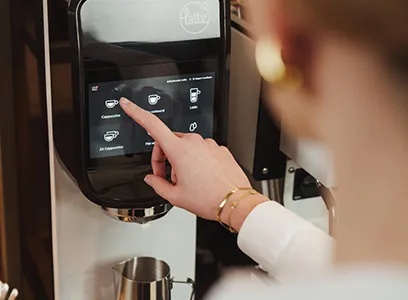
Lattiz empowers coffee houses to consistently deliver barista-quality milk foam, enhancing workflow efficiency and elevating the customer experience. Its innovative bag-in-box system reduces milk waste and lowers carbon emissions, aligning with our commitment to operational excellence and environmental sustainability.
Driving climate and health impact through collaboration
We participated in the Food Cluster activities at the New York and London Climate Action Weeks in 2025, to highlight the critical link between climate and health, and the power of collective action.
During New York Climate Week, the focus was on unlocking consumer health as a driver for climate action, scaling of promising local pilots and embedding prevention in policy and practice. In London, we explored how food system businesses can deliver co-benefits for climate and health, with practical guidance and real-world examples shared by leaders across retail, packaging, and investment.
As Hannah Pathak, CEO of Forum for the Future, noted:

Our partnership with SIG exemplifies the kind of bold, purpose-driven collaboration needed to tackle the complex challenges at the intersection of climate, health, and food. SIG’s leadership in sustainability and its practical contributions to the Climate & Health Coalition have helped bring our shared vision to life, demonstrating how businesses can drive meaningful change and deliver co-benefits for people and planet.
Global launch of aseptically filled banana purée
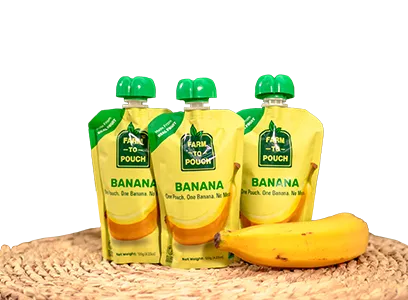
ALCA Corp leverages advanced processing and SIG’s aseptic spouted pouch system to transform bananas into high-quality, shelf-stable products with enhanced nutritional value. By extending the product shelf life while preserving the natural benefits of the fruit, ALCA Corp exemplifies how innovation can unlock new opportunities for nutritious, value-added food solutions. This makes ALCA Corp a strong partner in developing sustainable and commercially scalable products that meet the growing demand for healthy, long-lasting and aseptically filled nutrition.
Ensure product and food safety
Chief Supply Chain Officer
Ensuring uncompromising product and food safety through our packaging is foundational to our role in the food system. As we work to transform the food system, safeguarding this role by delivering our regenerative packaging solution is non-negotiable.
Continue to elevate all packaging plants to the highest possible Global Food Safety Initiative (GFSI) recognized food safety certification standards, by 2030 (from 2026).
-
Our plants are certified to Global Food Safety Initiative (GFSI) recognized standards4 that deliver uncompromising product safety and quality through a robust, integrated management system that proactively identifies, mitigates, and eliminates risks across the entire value chain.
-
Understanding the critical importance of Hazard Analysis and Critical Control Points (HACCP) and other risk management standards to our customers’ operations, we align our systems and expertise to not only meet, but actively support their compliance and quality goals, and strengthen their reputation.
-
Using digital tools, we are expanding our real-time, process-based and predictive quality control to all production facilities, safeguarding food safety while driving waste reduction through early detection.
-
We have a system and associated processes established to ensure backward traceability from our final products (package material and closures), through logistics and manufacturing, up to the raw materials used.
-
We treat customer complaints as valuable insights and through structured analysis and root cause investigation, we transform this feedback into actionable enhancements to drive continuous improvement.
-
Recognizing that employee engagement drives high quality, we embed a product safety and quality mindset and culture into daily operations, across all levels of our organization, through:
-
Empowering every employee to take ownership, act responsibly, and contribute to our shared standards of excellence; and
-
Targeted training, transparent communication, and leadership engagement.
-
-
We drive quality standards by continuing to review and update our SIG Excellence System, which is an audit by our internal global quality management experts.
-
We maintain an established process for product recalls or withdrawals, if required.
4 Except for our chilled carton plant in Hsinchu City, Taiwan, which is currently certified to ISO 22000:2018 and working towards certification to a GFSI-recognized standard, and our production plant in Voronezh, Russia, due to limitations in respect of data access.
Product and food safety at SIG
For the past ten years – since the start of externally reported tracking – SIG has had zero consumer product recalls, underscoring our commitment to product safety and compliance.
Global Quality Weeks held across all plants celebrated and strengthened product safety and quality culture through engaging activities like quizzes, games, and targeted training.
Transition is underway to the latest Brand Reputation through Compliance Global Standards (BRCGS) and SIG has already received top-level ratings in unannounced and announced audits regarding the new standard, demonstrating our continued excellence in food safety performance.
Assessing effectiveness
In addition to the performance assessment of our Food+ targets and Key performance indicators we assess the effectiveness of our policies and actions through the below reporting and monitoring by responsible parties:
Reporting |
|
Department |
|
Responsible |
|
Regularity |
|---|---|---|---|---|---|---|
Deliver nutritious food and help transform the food system |
||||||
SIG Incubator and Food Cluster Project Review |
|
Group Corporate Responsibility |
|
Chief Markets Officer |
|
Quarterly |
Ensure product & food safety |
||||||
Integrated Complaint and Claim Management process (ICCM) |
|
Global Quality Management |
|
Head of Global Quality Management |
|
Monthly |
Product withdrawal simulation |
|
Plant Quality Management Departments |
|
Plant Quality Management Heads |
|
Annual |
Technical Management Team Meeting (including industry and regulatory insights) |
|
Global Quality Management |
|
VP Global Research & Development |
|
Monthly |
Our targets and performance
2020 to 2025 targets and performance
Target |
|
Material topics |
|
Progress tracker |
|
2025 performance |
|
Next steps |
||||||||
|---|---|---|---|---|---|---|---|---|---|---|---|---|---|---|---|---|
Increase the total volume of nutritious1 food and beverage products brought to consumers in SIG packs by 50% by 2030 (from 2020) |
|
|
|
|
|
We delivered 16.8 billion liters of nutritious1 food and beverage products to consumers in our packaging in 2025 – a 49% increase. This places us close to achieving our target five years ahead of schedule. Our carton packaging accounted for 13.9 billion liters, a 23% increase compared with 2020, while bag-in-box and spouted pouches contributed an additional 2.9 billion liters in 2025. |
|
Retained in our Deliver nutritious food commitment. |
||||||||
Use SIG’s position within a more sustainable food supply system to create demonstrable positive impacts on nutrition and hydration by 2025 |
|
|
|
|
|
Through our participation in MISTA, we helped accelerate regenerative and nutrition-enhancing solutions. Our engagement in the Climate & Health Coalition’s Food Cluster strengthened industry action linking climate, health, and nutrition. We also progressed affordable protein innovation with Nutrition from Water (NXW), developing algae-based concepts aimed at closing nutrition gaps in rapidly growing economies. |
|
Our Deliver nutritious food commitment focuses on more specific, measurable and impactful actions going forward. |
||||||||
Support two start-ups per year through our SIG Incubator program to share unused filling capacity to deliver nutritious food safely and efficiently by 2025 |
|
|
|
|
|
We supported AnaBio Technologies and Nutrition from Water (NXW) to co-design shelf-stable, aseptic drinking concepts in SIG’s global test filling network. Since 2021 SIG supported and co-created 12 innovation projects together with start-ups and food tech companies. |
|
The SIG Incubator program continues in our Help transform the food system commitment with other similar programs, where we can remain flexible to focus on the programs that deliver the best outcomes to help transform the food system. |
||||||||
Intensify partnerships with customers to scale SIG Foundation’s Cartons for Good initiative by 2025 |
|
|
|
|
|
In 2025, Cartons for Good transformed 10.7 tons of surplus fruits and vegetables into more than 50,000 nutritious meal packs for underprivileged children, adults with oral health challenges, and people in need. The initiative continues to scale: following successful projects in Bangladesh and Thailand, implementation in Egypt is underway, with additional projects currently in the exploration phase. |
|
The Cartons for Good program continues in our Help transform the food system commitment with other similar programs, where we can remain flexible to focus on the programs that deliver the best outcomes to help transform the food system. |
||||||||
Maintain top level GFSI2-recognized certification at all packaging production plants |
|
|
|
|
|
25 of 263 plants achieved top level certification to GFSI-recognized food safety standards, with high or highest possible ratings. The remaining plant maintained certification to ISO 22000:2018 and is working towards certification to a GFSI-recognized standard in 2026. |
|
We have elevated our ambition of plant certification from “top level” to the “highest possible” rating in our Ensure product and food safety commitment. |
||||||||
Maintain existing ISO 9001:2015 certifications at production plants (including all aseptic carton plants) |
|
|
|
|
We maintained certification to the ISO 9001:2015 quality management standard across our operational aseptic carton business (aseptic carton production plants, closure plant, assembly plants, development), and at eleven of our bag-in-box, spouted pouch, and chilled carton production plants. |
|
We will maintain existing ISO 9001:2015 certifications at production plants, while focusing on our Ensure product and food safety commitment. |
|||||||||
|
||||||||||||||||


See Appendix: Key performance indicators for related key performance indicators.
2026 to 2030 targets
Target |
|
Material topics |
|
2025 performance |
||||||||
|---|---|---|---|---|---|---|---|---|---|---|---|---|
Deliver nutritious food |
||||||||||||
Increase the yearly volume of nutritious1 food and beverage products brought to consumers in all SIG packs by greater than 50%, by 2030 (from 2020) |
|
|
|
We have delivered 16.8 billion liters of nutritious food and beverage products to consumers in our packaging in 2025 – representing a 49% increase and placing us close to achieving our target five years ahead of schedule. |
||||||||
Deliver 14 billion liters per year of nutritious1 protein sources, by 2030 (from 2020) |
|
|
|
Reporting from 2026 |
||||||||
Help transform the food system |
||||||||||||
Run 5 innovation projects to increase nutrition across SIG regions in partnership with our industry partner ecosystem2, and the SIG Foundation “Cartons for Good” initiative, by 2030 |
|
|
|
Reporting from 2026 |
||||||||
Increase food system yield through total avoided food loss/waste of 250 million liters, utilizing our packaging and moving from chilled to aseptic packaging and smart dispensing, by 2030 |
|
|
|
Reporting from 2026 |
||||||||
Ensure product & food safety |
||||||||||||
Continue to elevate all packaging plants to the highest possible Global Food Safety Initiative (GFSI)3 recognized food safety certification standards, by 2030 |
|
|
|
Reporting from 2026 |
||||||||
|
||||||||||||
See Appendix: Key performance indicators for related key performance indicators.
Outlook
SIG will continue to drive transformation across the food system through innovation, safety and nutrition.
We are rolling out smart dispensing solutions for bag-in-box in the food service industry. Engineered for the future, SIG’s sterile, closed-loop systems offer clean, consistent, and automated dispensing with up to 99% product evacuation – reducing food waste, improving cost efficiency, and extending shelf life. Our connector technology ensures fast, easy integration with a wide range of dispensing equipment, supporting a more sustainable and streamlined food service experience.
To deliver more nutritious food, we continue to advance our pipeline of product innovations and investigate natural sugar reduction, working with food tech partners to maintain taste and texture across diverse categories. At the same time, we are strengthening product and food safety by expanding real-time, predictive quality control systems to all production facilities from 2026 onward.
These combined efforts will continue to ensure resilient, secure, and safe nutrition for all.
Continuing product innovations partnerships
Algae-based protein concept development: SIG and Nutrition from Water (NXW) joined forces in 2025 to develop integrated, affordable product concepts that combine algae-based protein concentrates with SIG’s advanced aseptic carton and spouted pouches. Algae-based protein is a previously unused and affordable protein source. The initiative is designed to help close the nutrition gap in rapidly growing economies, delivering protein-rich nutrition to communities where it is needed most.
Exploring options for probiotics: Following our successful collaboration with our customer AnaBio Technologies in 2024, we are continuing to explore rollout options with our customers to incorporate probiotics into shelf-stable drinks in aseptic cartons and spouted pouches.
Due to the complex and multi-phased process that typically spans several years from initial concept through to commercialization, these projects are in various stages of development.