Nature+
SIG is committed to leading the way in providing regenerative packaging solutions which contribute to halting and reversing of biodiversity loss, fostering a shift to a nature-positive economy.1
This includes:
forest landscape restoration and improved landscape management in hotspot areas of biodiversity loss beyond our value chain;
assessing and mitigating biodiversity loss drivers and adverse nature impact along our supply and value chain;
responsible sourcing of raw materials; and
robust communication options for our customers, brands and retailers; for example, through the Forest Stewardship Council (FSC™) label use on 100% of SIG cartons2.
SIG will achieve this by:
working toward improved management of forest landscapes and restoring forest ecosystems to a state that supports resilient, self-sustaining natural processes, reducing climate change impacts and enabling thriving nature and biodiversity for future generations;
delivering full traceability of our main raw material supply chains to understand and create knowledge regarding raw material extraction; and
avoiding biodiversity reduction and degradation of ecosystems in our value chain through:
maintaining responsible sourcing based on the highest standards available for all our A-materials3;
preventing pollution; and
introducing water stewardship.
Together with our action on Climate+ and Resource+, this approach will contribute to packaging solutions designed to deliver nature-positive outcomes.
1 Referenced in the Kunming-Montreal Global Biodiversity Framework.
2 The FSC™ label that customers can include on SIG packs is the FSC™ Mix label, which means the product is made with a mixture of materials from FSC™ certified forests, and/or FSC™ controlled wood.
3 See Responsible culture: Our suppliers for our A-materials definition.
Our commitments
The commitments below represent targeted action to regenerate ecosystems, halt biodiversity loss, and drive a just transition that delivers positive outcomes for both nature and people across our value chain:
Improve forest landscape management and support thriving forests to provide resilient, self-sustaining natural processes, enabling thriving nature and biodiversity for future generations.
Halt biodiversity loss and reverse our contribution to biodiversity and nature loss in alignment with the guidance of the Science Based Targets Network (SBTN), by 2030.
Prevent pollution through setting comprehensive A-material3 sourcing requirements for upstream low pollution raw materials, water stewardship and related impact mitigation roadmaps, by 2030.
3 See Responsible culture: Our suppliers for our A-materials definition.
Our approach
Measures taken and responsibilities
Support thriving forests
Director Group Corporate Responsibility
Improving forest landscape management and restoration helps secure the renewable resources essential to a planet and ensures long-term material availability from nature-based systems. This approach supports a just transition by protecting ecosystem services and strengthening the resilience of communities that depend on forest landscapes.
Partner to create, protect, restore or improve management of at least 650,000 additional hectares of forest beyond what we need to make our products4, by 2030 (from 2020)
Work with customers to include the Forest Stewardship Council (FSC™) label on 100% of the cartons we sell, by 2030
Our approach for forests contains responsible sourcing elements and actions in projects that matter.
We partner with WWF in the Forests Forward program, committing to a series of actions that go beyond FSC™ and connect to our Science Based Targets Network (SBTN) commitment. For further information on the Forest Forward program, see Appendix: Partnerships and memberships.
In partnership with WWF Switzerland, we are improving the management of forest landscapes in key biodiversity hotspots, outside of the SIG value chain and in addition to the FSC™ certified forest area in our paperboard sourcing.
As a long-standing member of FSC™ International, we actively support the development and implementation of its rigorous certification standard.
Beyond our 100% FSC™ certified sourcing, we partner with a key Liquid Packaging Board (LPB) supplier on increasing the FSC™ group certification for small private forest owners.
Through customer encouragement, we aim to place the FSC™ label on 100% of customer beverage cartons (96% share in 2025), showcasing packaging that is sourced without forest destruction or conversion and raising consumer awareness of the link between beverage cartons and sustainable forestry.
Our remaining low deforestation risk is mitigated through engaging suppliers and maintaining a robust due diligence system on our LPB sourcing.
We are continuing with our robust on-pack labeling approach which enables consumers to make choices based on accurate and substantiated information.
4 Based on the equivalent forest area needed to continually regenerate the wood needed to produce all the SIG cartons made in 2020 (the year we set the commitment). For details see www.sig.biz/en/sustainability/forest/
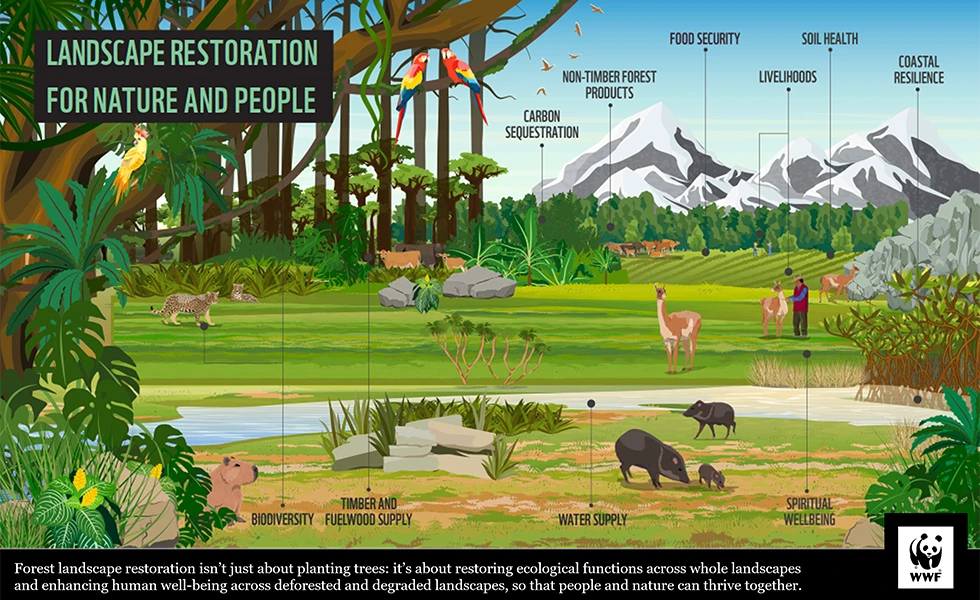
SIG and WWF Switzerland: A shared mission to preserve forest ecosystems
Through partnership projects with WWF, SIG is targeting improved management of 330,000 hectares of forest land in Mexico, Malaysia and Thailand, counting toward over 50% of our target to create, restore, protect or improve the management of 650,000 hectares of forest by 2030. We are working to support the other 50% through joint projects with our key paperboard suppliers.
These projects are not measured simply through reforestation but instead focus on improved management and restoration of forest landscapes (see SIG blog), protecting biodiversity, and supporting local communities in some of the world’s most ecologically significant landscapes. Together, they demonstrate how landscape-scale restoration can deliver improved climate change resilience, species protection, and sustainable livelihoods.
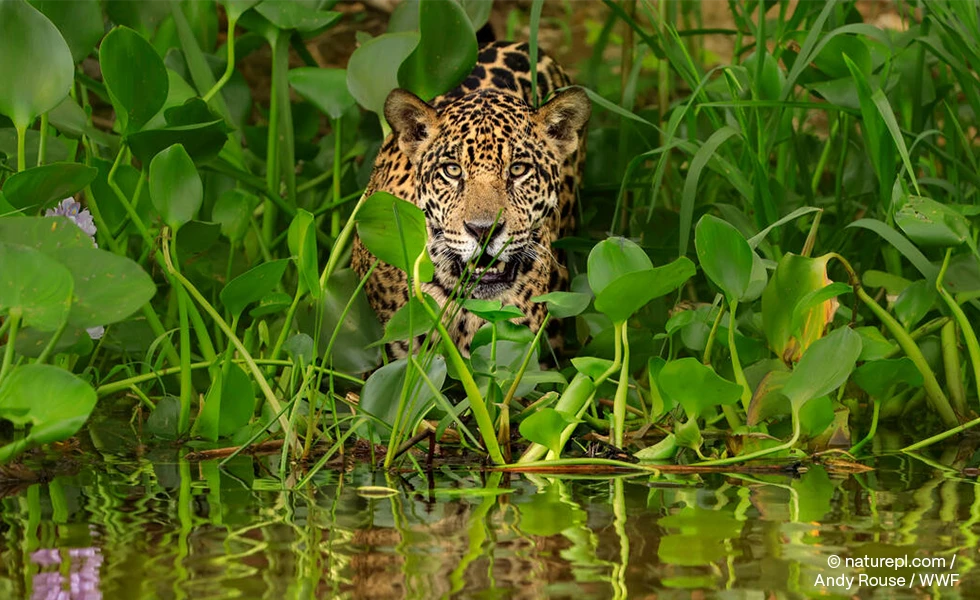
Mexico: Reconnecting jaguar habitats in the Central Pacific
In Mexico, the project focuses on landscape restoration for jaguar corridors in the Central Pacific Landscape. Restoration activities were performed in Nayarit and in Jalisco, including soil restoration, reforestation with 82,500 native plants in Nayarit alone, and fire prevention measures.
Community engagement was central, with 340 workshops held across 70 communities to promote holistic livestock management and coexistence with jaguars, with more than 700 producers participating in these activities. The installation of 31 electric fences helped prevent predation, avoided plant damage from livestock in the landscape corridor and provided a higher income for the farmers. Three training courses with over 80 participants were delivered to community forest fire brigades, focusing on forest fire prevention and suppression.
Wildlife monitoring using 329 camera traps confirmed jaguar presence in three key sites and more broadly across the landscape. Governance and education efforts included workshops with local “Jaguarundis”5 and environmental events to foster stewardship.
5 The Jaguarundis are an inter-community group involved in biological monitoring and surveillance activities, composed of 14 members from 9 communities surrounding the Marismas Nacionales Biosphere Reserve.
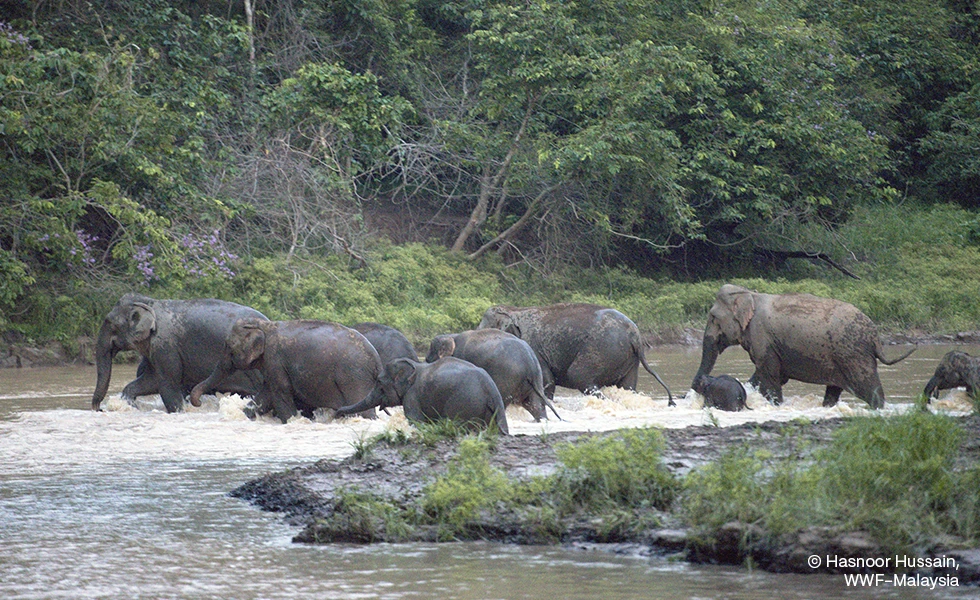
Malaysia: Strengthening the biodiversity and resilience of the Ulu Muda forest
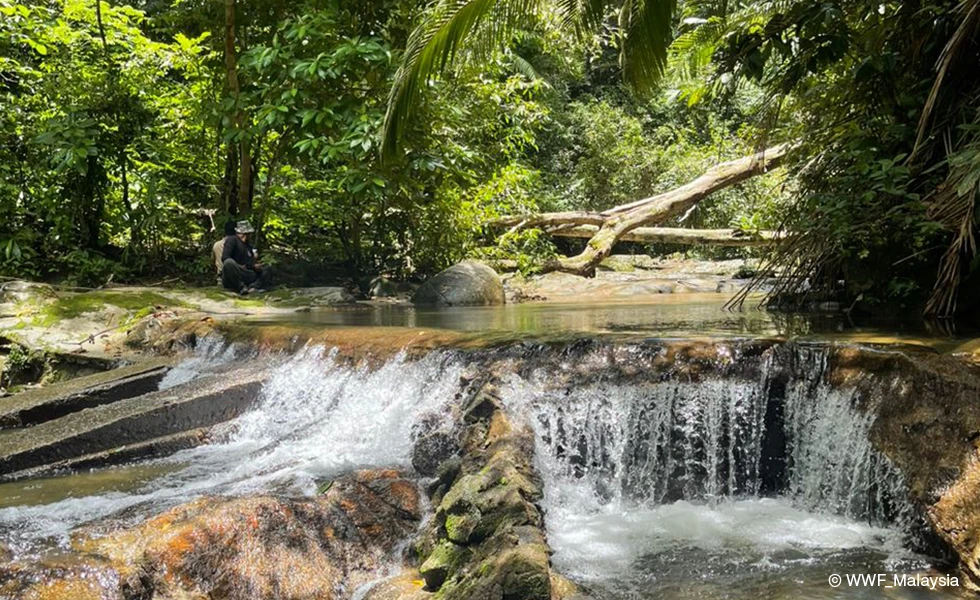
In Malaysia, with the support of local partners, the project targets an improved management of the Ulu Muda Forest Complex, a vital water catchment and biodiversity hotspot. This includes restoration measures and strengthening of the community’s stewardship.
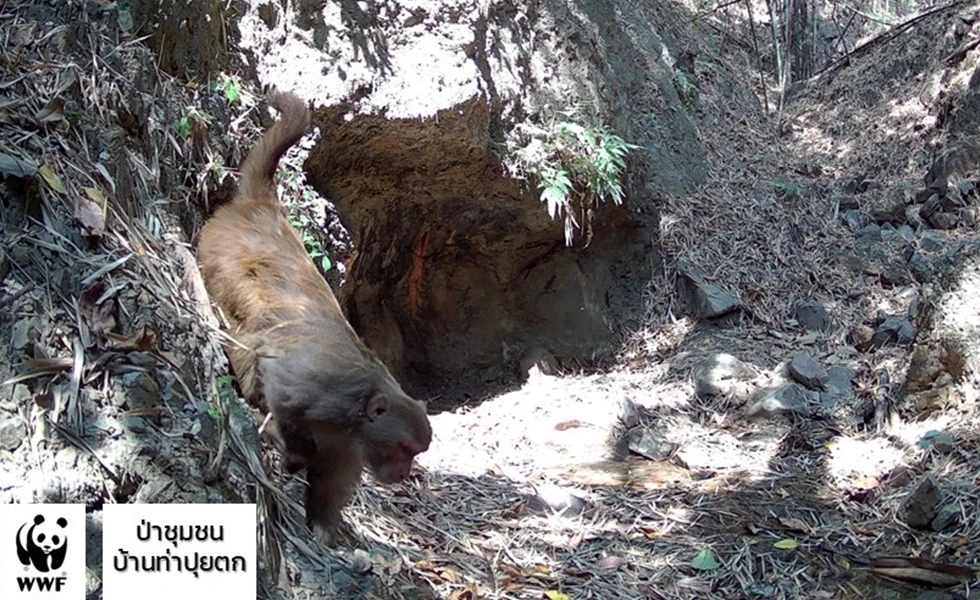
Restoration progressed this year through close engagement with the Forestry Department, site selection and development of restoration strategies. Camera trapping fieldwork within the ecological linkage connecting Ulu Muda to adjacent forest complexes revealed rich biodiversity, providing essential data to strengthen the protection and functionality of this corridor. Community engagement efforts included a carnival and a school program that highlighted the importance of the Ulu Muda forest, fostered conservation participation, explored alternative livelihoods, and supported community water-system mapping.

Thailand: Forest protection and connectivity in three important areas
Thailand’s project spans three landscapes: the Mae Ping–Omkoi Corridor, Lower Songkhram River Basin, and Thap Lan National Park.
Conservation work began in the Dawna Tessarim Landscape, with training on community engagement in designating new protected areas, and biodiversity monitoring using camera traps and management of a native tree seedling nursery. Pilot farmers adopted agroforestry training and six community forests began forest fire protection and improved forest management practices training.
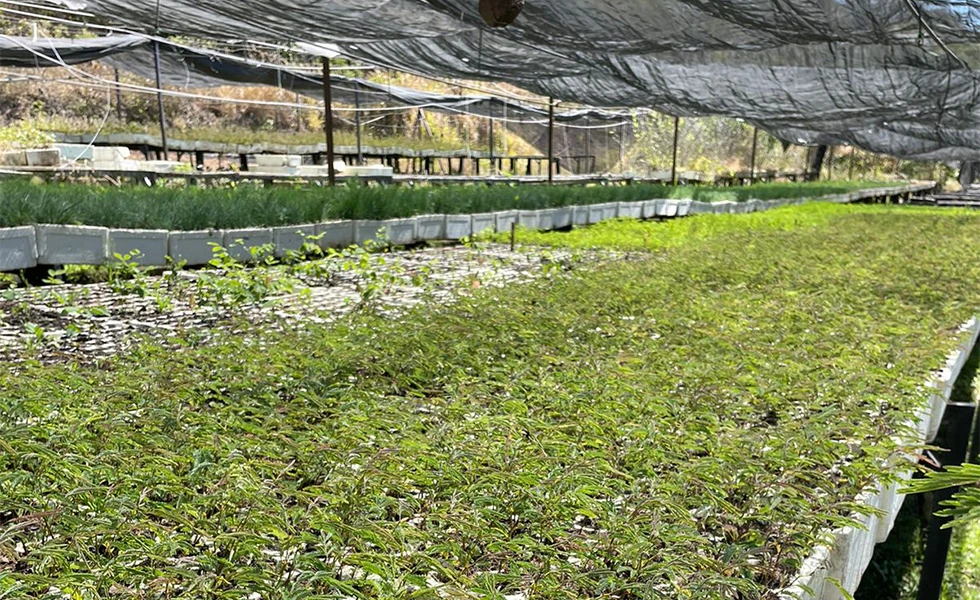
In the Songkhram Basin, work began to help restore flooded forests and improve fish conservation zones, with twenty-three community groups mobilized to improve forest and fish conservation practices. Two nurseries were constructed in which local native trees will be cultivated for next year’s restoration activities, along with training on restoration techniques and seed collection.
For detailed information on the milestones and progress of the three Forest Landscape Restoration projects, please visit the SIG website. For information about the collective impact of the Forest Forward program see the WWF Forest Forward impact report.
Halt biodiversity loss
Director Group Corporate Responsibility
Halting biodiversity loss is essential for us to build a regenerative packaging system that protects nature across SIG’s entire value chain – from sourcing raw materials to end-of-life impacts. By identifying biodiversity loss drivers and prioritizing action where it matters most, such as preventing pollution, this commitment supports a just transition that safeguards ecosystems and communities reliant on them.
Assess SIG impacts and dependencies on nature and set targets for nature in line with the Science Based Targets Network (SBTN) framework, by 2027 (from 2026)
Collaborate with key A-materials3 suppliers to meet our science-based targets for nature, by 2030, representing two thirds of the A-materials procurement spend (from 2026)
For our operations, which are predominantly situated in industrial zones, we safeguard biodiversity protection through our local EHS environmental assessments under ISO 14001 and the WWF Risk Filters on Water and Biodiversity.
We joined the Science Based Targets Network (SBTN) in 2023 to align our approach with the Kunming-Montreal Biodiversity Framework and its goals (see Appendix: Partnerships and memberships).
We performed an in-depth assessment of potential value chain impacts on the five nature pressures (land use and land use change, water use, soil pollution and water pollution) for our supply chain to effectively address impact reduction at scale, in line with the guidance of the SBTN.
We are reviewing our nature-related sourcing requirements in line with identified nature pressures (see Preventing pollution and Responsible sourcing).
To enhance consumer choice through improved information, we partner with SHINE (see Appendix: Partnerships and memberships) to advance the life-cycle assessment process, including the integration of biodiversity loss data in alignment with the Kunming-Montreal Global Biodiversity Framework.
All efforts toward our Resource+ commitments additionally contribute to our efforts to reduce biodiversity loss primarily by delivering products with a lower environmental impact, but also by diverting used packaging from ending up in nature through collection and recycling.
3 See Responsible culture: Our suppliers for our A-materials definition.
Land Use Assessment
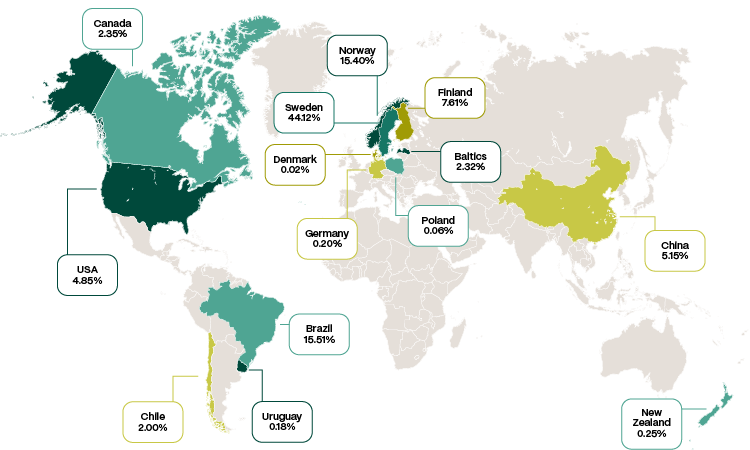
As part of SIG’s in-depth assessment of potential value chain impacts on nature from our supply chain, we used the Locate, Evaluate, Assess, Prepare (LEAP) approach to identify sourcing regions and pressures for our main Liquid Packaging Board (LPB) and aluminum. The insights from this assessment will help us to refine our approach, set targets in line with the SBTN and guide supplier engagement on potential restoration projects that directly combat biodiversity loss. Our initial findings of LPB sourcing regions and predominant tree species are presented below. The wood we use – SIG – for better
Sourcing regions
Tree species
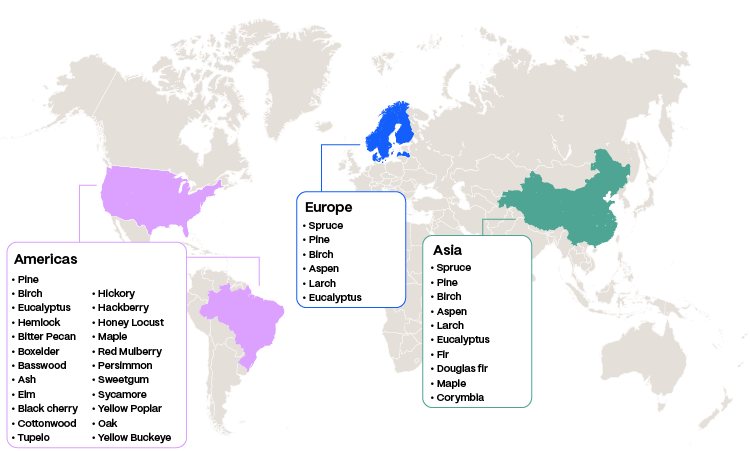
LPB supplier data on wood supply reflects 2024 figures, as 2025 data was unavailable at the time of publication. The latest infographic and updated data will be published online at https://www.sig.biz
Prevent pollution
Preventing pollution is a key mitigation strategy addressing biodiversity loss drivers and reducing harm to human health and ecosystems across our value chain. SIG product life-cycle assessments cover all relevant environmental impacts including air and water emissions allowing us to detect hotspots along the value chain and react. By tackling major pollution sources – from raw material sourcing to water and waste management – our commitment supports a just transition that protects both nature and the communities connected to it.
Upstream
Director Group Corporate Responsibility
With a significant portion of pollution impacts occurring upstream, supplier engagement is vital to the success of commitment.
Engage with suppliers regarding pollution mitigation roadmaps (avoid, reduce, restore and regenerate) and monitor progress annually, until 2027 (from 2026)
The certifications used for our A‑materials3, as outlined in the Nature+: Responsible sourcing target, include standards that prevent pollution.
Supplier collaborations established under our Climate+: Decarbonizing our value chain measures drive the adoption of sustainability practices, including support for pollution reduction.
3 See Responsible culture: Our suppliers for our A-materials definition.
Downstream
Director Group Corporate Responsibility
Our efforts to prevent pollution in the downstream value chain include both internal, customer and community actions.
Every new filling machine is designed to use less electricity and resources, including water, therefore reducing the potential output of pollutant by our customers (see Climate+: Decarbonizing our value chain).
We support customers to reduce emissions through the SIG EcoFill Consulting program, tools and support on their product footprint and efficiency projects, including direct investments (see Climate+: Decarbonizing our value chain).
To support the prevention of downstream pollution, such as macro- and microplastics from used packaging where household waste is not properly managed, we commit to:
Designing our packaging for recyclability, enabling integration into traditional recycling systems (see Resource+: Designing for recycling).
Enhancing end-of-life collection and recycling at scale (see Resource+: Recycling at scale).
In our operations
Chief Supply Chain Officer implemented by EHS Lead
While the majority of pollution impacts stem from other parts of our value chain, we remain committed to improving by continuously implementing robust measures across our operations. We use relatively little water, and it is not identified as a material topic for our operations, however we ensure the responsible use and discharge of water.
We conduct regular SEDEX SMETA audits and maintain ISO 14001 certifications to uphold environmental standards (see Appendix: Certifications).
Our responsible water use is maintained by assessing water quantity, quality, and stress risks, while striving to minimize consumption in all possible cases, including:
the installation of flow meters at all production plants allows monitoring of specific water usage and identifying of high-consumption areas;
water management systems at sites in water-stressed areas identified via the WWF Water Risk Filter;
monthly tracking of water consumption and withdrawal data, including fresh surface water (lakes, rivers), fresh groundwater and water discharge (returned at equal or better quality);
limiting water storage to fire water tanks, with minimal environmental impact unless refilling is needed; and
enforcement of a minimum effluent discharge quality standard, measuring chemical oxygen demand (COD) against legal limits at all sites.
Waste reduction at SIG focuses on:
eliminating landfill waste through reuse, recycling, or energy recovery when other options are not feasible; and
ensuring responsible disposal of hazardous and electronic waste to prevent environmental harm, including from macro- and microplastics in areas where household waste is not properly managed.
The measures taken to Decarbonize our operations, particularly those that include renewable energy generation, electrification and intensity reduction, also contribute to our efforts to prevent pollution.
Water use in our operations
A total 568,249m3 of water was supplied to SIG Group in 2025, including 327,576m3 in water-stressed areas6. We discharged 369,735m3 of waste water in 2025 (around 65% of the total supply), including 178,926m3 in water stressed regions.
Production waste by disposal method in 2025
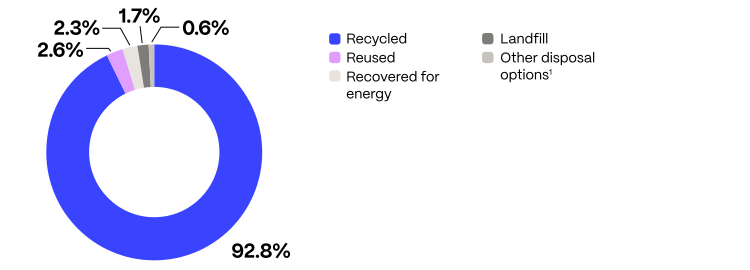
6 Based on an assessment using the WWF Water Risk Filter, plants in water-stressed areas include Merced, USA; Queretaro, Mexico; Riyadh, Saudi Arabia and Suzhou, China.
Responsible sourcing
VP Global Sourcing & Procurement
Responsible sourcing plays a major role in restoring forests, halting biodiversity loss and preventing pollution, therefore mitigating negative impacts on biodiversity and achieving nature positive outcomes.
Maintain 100% certified A-materials3 (FSC™, ASI and ISCC PLUS7)
Sourcing of our A-materials3 from certified sources (FSC™, ASI and ISCC PLUS) contributes to all our commitments in Nature+ and further contributes to the commitments of Resource+ and Responsible culture: Communities.
Paperboard8: FSC™ (Forest Stewardship Council™) certification ensures all our paperboard originates from sustainably managed forests and controlled sources9. The certification additionally provides guarantees that biodiversity is safeguarded, deforestation is prevented, water is used efficiently, water pollution is avoided, local communities, Indigenous peoples and workers’ rights are protected, and forest carbon storage and ecosystem services are maintained. Paperboard production additionally makes use of sawmill wood chips and saw dust residues.
Aluminum foil: All of our aluminum foil supply chain meets Aluminium Stewardship Initiative (ASI) Performance Standards and Chain of Custody Certification, promoting responsible sourcing and production. This includes criteria for labor rights, greenhouse gas emissions, water and waste management, and a material accounting system – with links to industry waste input.
Polymers and films10: We apply a mass balance system verified by International Sustainability & Carbon Certification (ISCC) PLUS for polymers and films, supporting the shift from fossil-based to recycled and renewable forest-based feedstocks. This certification ensures full traceability of certified materials across the supply chain and aligns with our goal to increase recycled and renewable forest-based polymers in packaging. Available for all our aseptic cartons, our renewable forest-based polymers solution is linked to tall oil, a wood component and residue in papermaking, while our circular polymer solutions are linked to post-consumer recycled plastics.
Customers are encouraged to include the Aluminium Stewardship Initiative (ASI) Responsible Aluminium Sourcing logo on their packaging designs, enhancing information and allowing customers to choose responsibly sourced materials.
Supporting forests beyond our A-materials3
At SIG, all paperboard used in our carton beverage packaging is 100% FSC™ certified9, demonstrating our commitment to responsible sourcing. But our efforts extend beyond our own supply chain.
In key sourcing regions like Sweden, up to 48% of managed forest land is held by small and private owners who often face barriers to FSC™ certification. These include financial constraints, administrative complexity, and limited awareness of the benefits.
In 2025, we started a collaboration with a key supplier to help inform and engage the small and private forest owners on the value of FSC™ certification. Together, we supported efforts to raise awareness of its environmental benefits and promote simplified group certification schemes to encourage broader adoption.
By promoting responsible forest management beyond our direct sourcing, we help protect biodiversity, water quality, and climate resilience – ensuring our packaging contributes to a thriving planet.
3 See Responsible culture: Our suppliers for our A-materials definition.
7 This target only includes ISCC PLUS certification of polymers linked to forest-based renewable or recycled polymers through mass balancing, as there are currently no certification schemes available, or expected in the near term, for other polymers that meet our high sustainability standards.
8 Our cartons use paper-based liquid packaging board, referred to throughout as “paperboard”.
9 SIG uses FSC™ Mix material that allows the mixing of FSC™ certified wood with FSC™ controlled wood and ensures that an equivalent amount of FSC™ certified wood is procured at the beginning of the value chain.
10 SIG currently uses ISCC PLUS certified bio circular polymers which are mass balanced and where it is ensured that a corresponding amount of fossil feedstock is replaced with the wood component tall oil in the polymer production.
Assessing effectiveness
In addition to the performance assessment of our Nature+ targets and Key performance indicators we assess the effectiveness of our policies and actions through the below reporting and monitoring by responsible parties:
Reporting |
|
Department |
|
Responsible |
|
Regularity |
|---|---|---|---|---|---|---|
Support thriving forests |
||||||
FSC™ label reporting |
|
Global Sustainability and Digital Marketing |
|
Global Product Marketing |
|
Monthly |
Projects update |
|
WWF Switzerland |
|
Group Corporate Responsibility |
|
Quarterly |
Target update |
|
WWF Forests Forward |
|
|
Annual |
|
Halt biodiversity loss |
||||||
Supplier engagement |
|
Global Sourcing and Procurement |
|
Group Corporate Responsibility |
|
Quarterly |
Prevent pollution |
||||||
Waste KPIs |
|
Manufacturing Plants |
|
Global EHS Lead |
|
Monthly |
Water use and release |
|
|
|
Monthly |
||
Water Risk Management System review |
|
|
|
1–3 years |
||
Environmental non-conformity reporting |
|
|
|
Situation related |
||
Responsible sourcing |
||||||
ASI label reporting |
|
Global Sustainability and Digital Marketing |
|
Global Product Marketing |
|
Monthly |
FSC™, ISCC Plus and ASI audits by internal specialists |
|
Manufacturing Plants |
|
Group Corporate Responsibility |
|
Annual |
Our targets and performance
2020 to 2025 targets and performance
Target |
|
Material topics |
|
Progress tracker |
|
2025 performance |
|
Next steps |
||||||||||
|---|---|---|---|---|---|---|---|---|---|---|---|---|---|---|---|---|---|---|
Partner to create, protect, restore, or improve management of at least 650,000 additional hectares of forest beyond what we need to make our products1 by 2030 |
|
|
|
|
|
Our three partnership projects with WWF are continuing in Mexico, Malaysia and Thailand. In 2025, we launched a project in Sweden to boost FSC™ group certification of small private forest owners. |
|
Retained in our Support thriving forests commitment. |
||||||||||
Partner with a non-governmental organization (NGO) to develop a methodology to measure the impact of FSC™ certification by 2025 |
|
|
|
|
At the request of our business partners, with whom we were jointly pursuing this topic, this project was put on hold pending the results of an external scientific research project. |
|
We are shifting to more targeted action on biodiversity and ecosystems through setting targets aligned with the Science Based Targets Network (SBTN) and collaboration directly with suppliers in line with our Halt biodiversity loss commitment. |
|||||||||||
Work with customers to include the FSC™ label on 100% of the cartons we sell by 2025 (up from 97% in 2020) |
|
|
|
|
|
We remain committed to promoting the on-pack use of the FSC™ label. Progress to 100% is not entirely in our control and our customers own the final decision regarding their on-pack design. |
|
Retained in our Support thriving forests commitment. |
||||||||||
|
|
|
|
We maintained the proportion of A-materials sourced from certified suppliers at 69%, consistent with our performance in prior years. |
|
We have Responsible sourcing target moving forward as there are currently no certification schemes available, or expected in the near term, for virgin polymers that meet our high sustainability standards. |
||||||||||||
Maintain 100% FSC™ certified supply of paperboard for our cartons4 |
|
|
|
|
We purchased 100% of the paperboard for our aseptic and chilled cartons with FSC™ Mix certification in 2025. |
|
Our focus has shifted to 100% certification of all A-materials2, which includes the paperboard for our cartons in our Responsible sourcing commitment. |
|||||||||||
|
||||||||||||||||||


See Appendix: Key performance indicators for related key performance indicators.
2026 to 2030 targets
Target |
|
Material topics |
|
2025 performance |
||||||||
|---|---|---|---|---|---|---|---|---|---|---|---|---|
Support thriving forests |
||||||||||||
Partner to create, protect, restore, or improve management of at least 650,000 additional hectares of forest beyond what we need to make our products1, by 2030 (from 2020) |
|
|
|
Our three partnership projects with WWF are continuing in Mexico, Malaysia and Thailand. In 2025, we launched a project in Sweden to boost FSC™ group certification of small private forest owners. |
||||||||
Work with customers to include the Forest Stewardship Council (FSC™) label on 100% of the cartons we sell, by 2030 |
|
|
|
We remain dedicated to promote the on-pack use of the FSC™ label. Progress to 100% is not entirely in our control and our customers own the final decision regarding their on-pack design. |
||||||||
Halt biodiversity loss |
||||||||||||
Assess SIG impacts and dependencies on nature and set targets for nature in line with the Science Based Targets Network (SBTN) framework, by 2027 |
|
|
|
Reporting from 2026 |
||||||||
Collaborate with key A-material2 suppliers to meet our science-based targets for nature, by 2030, representing two thirds of the A-materials procurement spend |
|
|
|
Reporting from 2026 |
||||||||
Prevent pollution |
||||||||||||
Engage with suppliers regarding pollution mitigation roadmaps (avoid, reduce, restore and regenerate) and monitor progress annually, until 2027 |
|
|
|
Reporting from 2026 |
||||||||
Responsible sourcing |
||||||||||||
Maintain 100% certified A-materials2 (FSC™, ASI and ISCC PLUS3) |
|
|
|
Reporting from 2026 |
||||||||
|
||||||||||||
See Appendix: Key performance indicators for related key performance indicators.
Outlook
In the years ahead, SIG will accelerate Nature+ by regenerating nature – working both within our value chain and beyond it.
Together with our suppliers and the WWF, we will advance thriving forest projects that contribute to our target of creating, restoring, or improving the management of 650,000 hectares of forest landscapes by 2030. These efforts will enhance biodiversity, strengthen ecosystem services, and secure renewable resources essential to our regenerative packaging approach.
In parallel, we will further align our efforts and targets with the Kunming-Montreal Biodiversity Framework, in line with the requirements set by Science Based Targets Network (SBTN). At the same time, we will further expand traceability of key raw materials and reinforce responsible sourcing to address the main drivers of nature loss.
Building on these efforts, we will deepen our work on pollution prevention and water stewardship with suppliers and at our own sites.
Through these actions – and in close collaboration with WWF and other partners – SIG will help restore ecosystems, enable resilient communities, and advance a regenerative, nature-positive economy.